Home/ Seniors

 Mi-Lo Pendant
Staying independent is one of the most important parts of growing older, and the right safety device can make that easier for the whole family. Medical alert systems for seniors give older adults a simple way to call for help and stay connected, while giving family members reassurance that support is close at hand. Life Assist Advantage Inc. designs its safety devices around a single idea: help should be easy to reach, wherever the day takes you.
Life Assist medical alert systems for seniors offer SOS calling, GPS, two-way voice, and standard fall detection across the Mi-Lo Pendant and Smartwatch, with a choice of Family Monitoring at CA$50/month or 911 Monitoring at CA$60/month.
A medical alert system for seniors is a wearable device, worn as a pendant or a watch, that lets an older adult call for help at the press of a button. Modern systems go further, adding GPS location, an SOS call, two-way voice, and fall detection, so an older adult can reach help directly and be located quickly whether they are at home or out in the community.
Unlike an ordinary alarm, these senior safety devices work on their own cellular connection, so there is no need to carry or even own a cellphone to get help. That combination is what makes a medical alert system for seniors genuinely useful in everyday life, not only in an emergency.
Every family reaches this decision differently. For some, it follows a fall or a health change. For others, it is simply the wish to support a parent’s independence a little longer. Common reasons families choose medical alerts for seniors include:
The goal is never to limit an older adult’s freedom. Good senior safety devices support independence by making help easy to reach when it is actually needed.

Evelyn enjoys breakfast at home with her Mi-Lo Pendant on. Its longer battery life means less time spent thinking about charging.
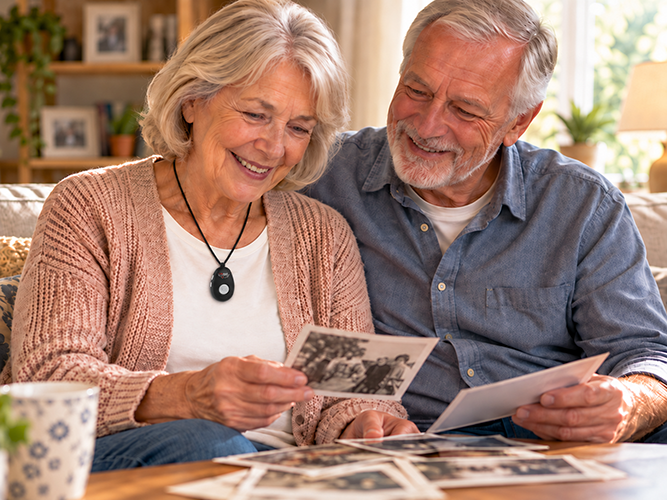
Evelyn looks through old photos with her husband, her Pendant worn comfortably, just another part of her everyday routine.
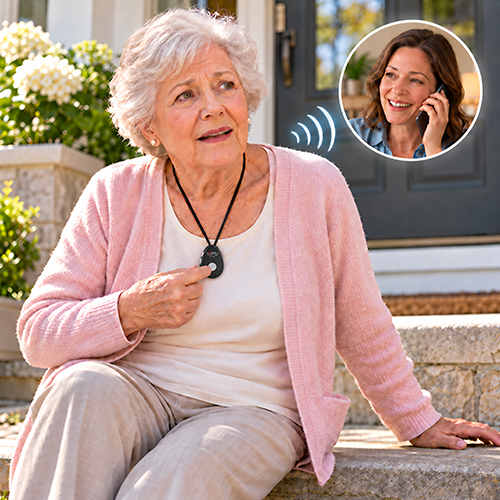
After a stumble, Evelyn presses SOS. Two-way voice connects her with her daughter, hands-free.
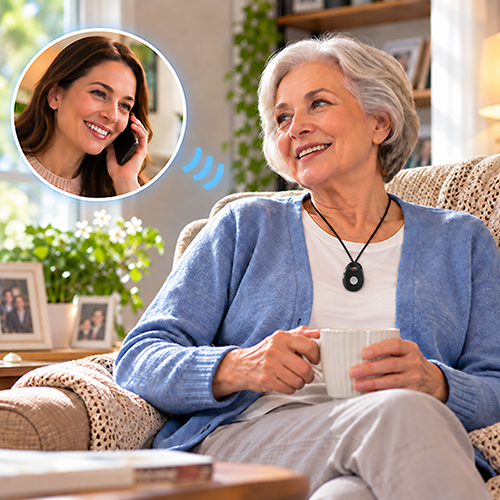
Her daughter stays on the call until Evelyn feels steady, and Evelyn goes back to her afternoon, reassured and independent.
When comparing options, a few features make the biggest difference in daily life:
One press connects to help, day or night
Helps responders and family find the wearer when it matters
The wearer can speak to help directly through the device
included as standard, it can raise an alert automatically if a hard fall is detected
Alerts can go to family or to a trained emergency team
Medical conditions, medications, and contacts can be shared with responders
A capable emergency button for seniors brings these features together in one easy-to-use device, so the person wearing it doesn’t have to think about the technology behind it.
Life Assist offers two ways to respond to an alert, presented as equal options so families can choose what fits:
SOS and fall alerts go to the family members or caregivers the customer chooses, a good fit when someone is usually nearby.
Alerts are handled by a trained emergency team that can coordinate EMS, fire, or police to the wearer's location.
Both options include the same core safety features. The difference is simply who responds when the button is pressed. You can also change your service type at any time, giving you more control over how your Mi-Lo device fits your needs. Whether you choose Family Monitoring or 911 Monitoring, you can adjust your service as your situation changes.
Life Assist offers more than one senior alert option, so the choice comes down to daily life:
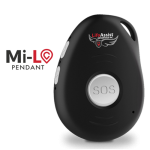
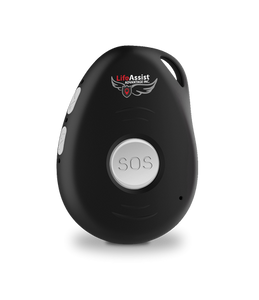
is a great choice for someone who wants an easy to use safety device with longer battery life and a clear SOS button.
$195.00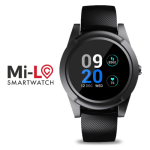
It's a great choice for someone who doesn't want to carry an extra device and would rather have safety features built into a watch they can wear throughout the day.
$269.00
For families weighing a GPS tracker for elderly relatives, the Pendant and Smartwatch both provide outdoor GPS, while the Beacon adds indoor detail, so coverage can match how and where a senior spends their day.
How a device is worn matters just as much as its features, especially for daily comfort. Life Assist offers a few ways to wear and maintain the Mi-Lo devices:
Mi-Lo Lanyard
CA$10. Wear the pendant comfortably around the neck.
Mi-Lo Wristband
CA$30. Wear it on the wrist for anyone who prefers not to have anything around the neck.
Mi-Lo Belt Clip
CA$30. Attach it to a belt or waistband for hands-free carry.
Mi-Lo Charging Base
CA$50. A simple home dock that makes daily charging part of the routine.
Secure Wear Clasp
For added reassurance, the Mi-Lo Smartwatch can be paired with an optional Secure Wear Clasp designed to help the watch stay in place throughout the day. This can be helpful for individuals who may unintentionally remove or set down the watch, including some people living with dementia, Alzheimer’s, or other cognitive challenges.
These options let a senior wear the device in the way that feels most natural, which makes it more likely to be worn consistently.
Our Alberta-based team can talk through the specifics with you.
A good emergency button for seniors combines an SOS button, GPS location, two-way voice, and fall detection in one easy-to-use device, with a choice of who responds when the button is pressed.
The best medical alert system for seniors depends on daily life. A simple pendant suits someone who wants one clear button, while a smartwatch suits an active older adult who wants emergency response, and notifications for care teams or families in a familiar watch design. Both include an SOS button, GPS, two-way voice, and fall detection.
Yes. Because Life Assist devices use their own cellular connection and GPS, an older adult can call for help and be located at home or out in the community. Families weighing a GPS tracker for elderly relatives will find the Pendant and Smartwatch both provide outdoor GPS location.
Yes. Fall detection is included as standard, so a device can automatically raise an alert if it detects a hard fall, in addition to the SOS button.
Yes. Families can choose Family Monitoring, where alerts reach chosen contacts, or 911 Monitoring, where a trained emergency team can coordinate a response. Both are offered as equal options.